// creator + painter
The creator + painter
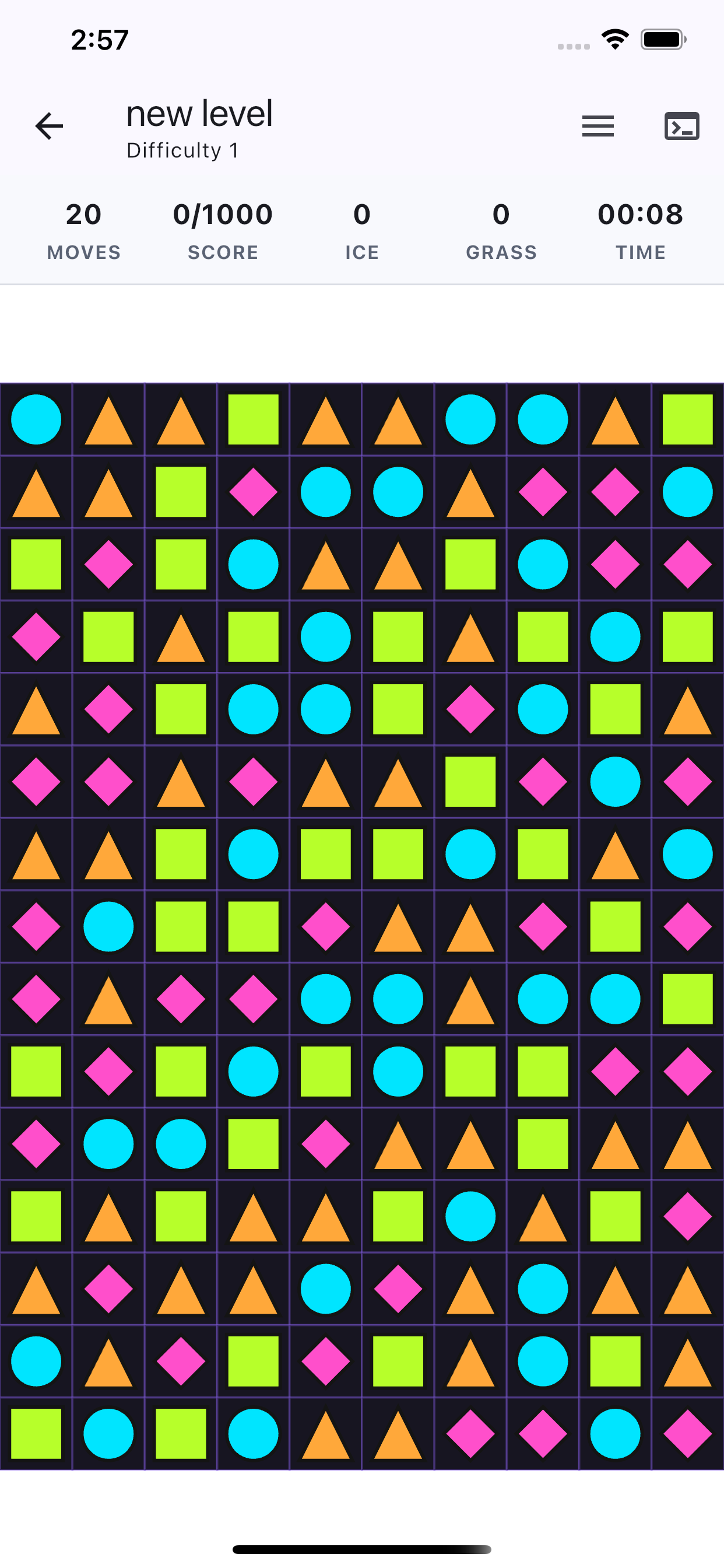
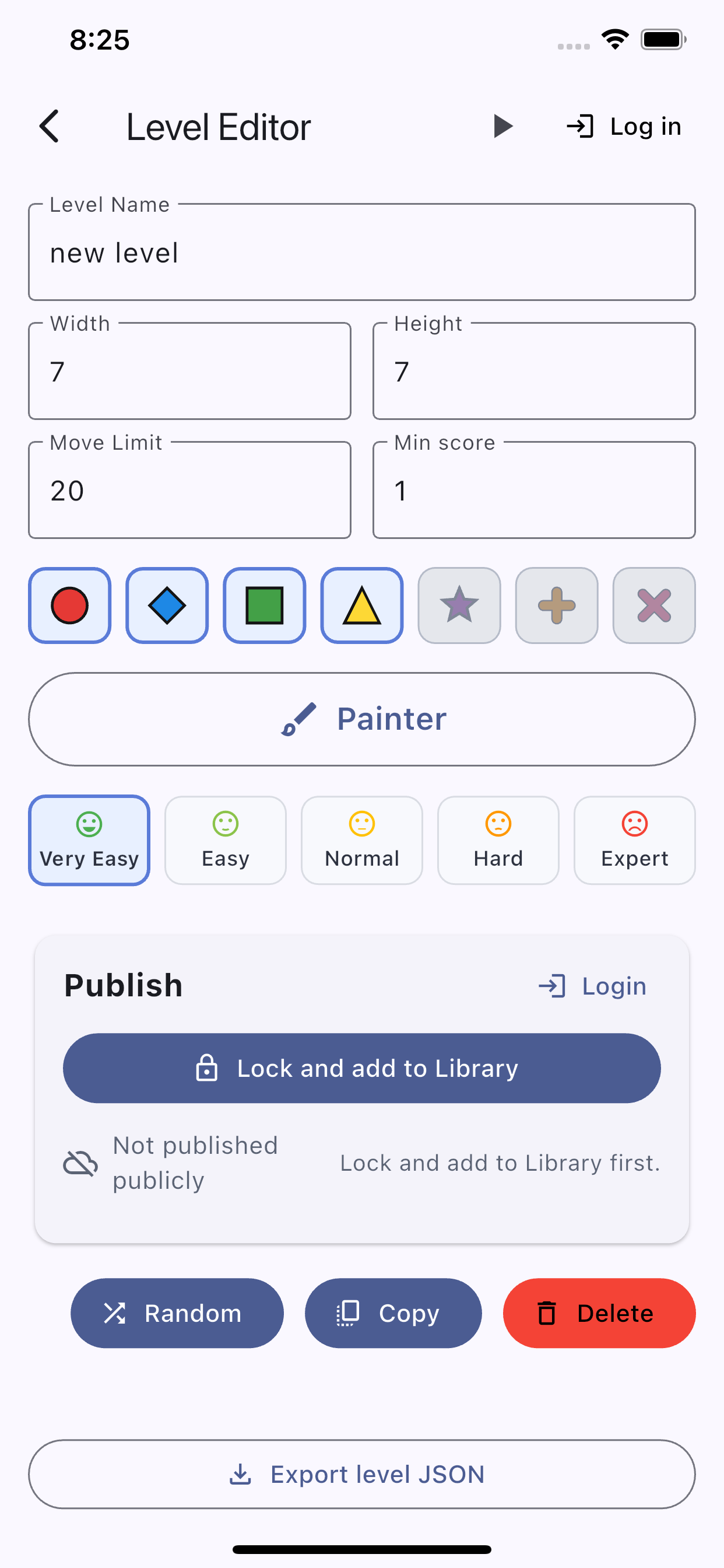
The editor lives inside the game, not in a separate pro tier. You paint the board directly: lay down cells, carve out voids, place walls and spawn points, and set objectives. It's the same tool we use to make levels, handed to you unlocked.
// physics
Non-rectangular physics
Most match-3 games assume a grid where everything falls straight down. Matchforge doesn't. Boards can be any shape, with voids and walls interrupting the flow, spawn points feeding pieces from anywhere, and per-cell flow directions that route movement sideways or around corners. The physics is a design surface, not a fixed rule.
// match rules
Configurable match rules
What counts as a match is up to the level. Require classic line-4 and line-5, or demand L-shapes, T-shapes, angles, and 2×2 boxes. Each match shape can be tied to the special it produces, so two levels with the same pieces can play like completely different games.
// specials
Advanced specials & combos
Beyond the usual line-clears and bombs, Matchforge adds heli bombs and special-plus-special combinations that chain into bigger board reactions. Combining two specials isn't a bonus animation — it's a deliberate tool a creator can build a puzzle around.
// publishing
Cloud publishing
When a level is ready, it publishes to the cloud with your creator username and its metadata attached. From there it's downloadable by anyone. Your name rides along with every level you make — the catalogue is built out of the community, not curated by us.
// catalogue
The searchable catalogue
Discovery feels like browsing a marketplace, not tapping through a static map. Filter by board size, difficulty, ball count, ice, grass, rating, completion rate, attempts, or creator. The good stuff is findable, and so is the brutal stuff you're looking for at 1am.